“If I’m not at least a little nervous about tackling a new project, I’m probably not pushing myself hard enough.” – Nina Revyor
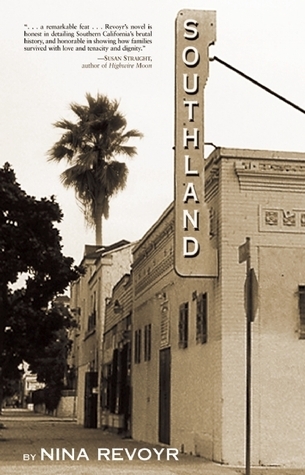
A literary crime novel highlighting the Crenshaw District over a timeline of three generations, Southland isn’t a quick or ravenous read. It’s a slow burn that you want to take your time with, reminding us that collective change can begin with individual isolated actions.
The physical setting of Southland, which spans historic Angeles Mesa into modern day Crenshaw and Watts, serves as the beating heart of the story. All the other interpersonal narratives are woven around and through it, changing with time as the city changes too. As I get older and see more and more of my old haunts shutter their doors, I realize how much truth there is to a few cliches, like “you just had to be there” or the “right place, right time.”
Experiences with your community ultimately come down to leaning into chance and curiosity. When the landscape of your city irrevocably changes or disappears, there’s nothing you’ll be able to do to resurrect the time you used to spend there.
Jackie is a lot of us
Who you are and how you conduct yourself is shaped by numerous factors, including upbringing, location, values, and social class. For children who had parents in blue-collar jobs, they often carry with them a blue-collar sensibility and set of values that permeate through their lives, whether known or not.
But what happens when you never try to understand where you came from? Who you came from? What happens if you never even try to remember?
Jackie Ishida, the granddaughter of Frank and a second generation Japanese American, is, like so many of us, comfortably enveloped in privilege. After the murders happened in his store, Frank moved his family to Gardena, just a dozen miles away but a universe apart in terms of class differences. Jackie’s parents became doctors; she’s now in her third year of law school and on her way to a corporate job that’ll probably catapult her all the way to the Westside.
One of those privileges often, is silence: the ability to not speak up on the sufferings of others worse off than you because you are doing fine.
This silence is also the reason why she knows nothing about her grandfather, or the shocking scene that lies at the core of Southland’s intrigue: four Black boys found dead in the freezer of his store in the aftermath of the Watts riots. No one cared enough even to report it. Jackie’s inability to reconcile her grandfather’s past with her concept of him is how the tale begins, but it expands into an investigation of what it means to renounce the privilege of silence and ignorance. The novel is a love letter to Los Angeles, but also a gentle takedown of Jackie’s assumptions and judgmental nature, the legacy of growing up enveloped in privilege and a genuine lack of awareness.
In so many ways, Jackie Ishida’s family suffered: internment, forced participation in World War Ⅱ, constant mistreatment from white people due to their being Japanese. But rather than address the systemic injustices they faced, they secured higher positions (and profit), letting their silence wrap around them like a noose.
“Her family didn’t talk,” Revoyr writes. “None of them, including her grandfather. No words laced together into a chain of intertwined stories that connected her to anyone’s past. More than gaps in the narrative; there was no narrative. Whole years, like the years of World War Ⅱ, dropped cleanly from their collective history.”
This excerpt from Vallaire Wallace’s article, “The Novel That Shows Us How to Face Our Past to Change Our Future” in Electric Literature aptly sums up everything I felt from reading Southland. It also reminds me of an old article I wrote in Very Well Mind about the role of silence in Asian American families.
If you’re lucky enough to still have your grandparents in your life, give them a call today. I bet they’d love to hear from you.


Leave a comment